Welcome to the ECPYN blogspot!

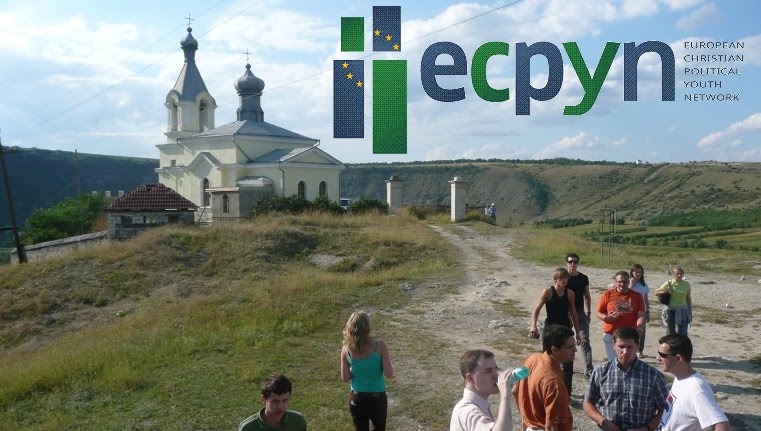
This blogspot was started by the participants of the 5th International Summer School of ECPYN in Chisinau, Moldova, August 24-29 2008.
You can also visit our official website at www.ecpyn.org, follow ECPYN on Twitter or join our facebook group. Opinions expressed on this blog do not necessarily represent official ECPYN positions.

Wednesday, December 9, 2009

Christine Boutin responds to the polemic on the minarets:

“France is not a territory of Islam, we must show that France is not a country without culture or traditions”

The polemic on the Swiss referendum illustrates well the difficulty of our country of being in a dialogue of cultures. Christine Boutin (former Minister of Housing and Cities and leader of the Christian-Democratic Party (PCD) of France):
“After 40 years of soixante-huitard thought, does one have to avoid recalling that our country is of Christian tradition?”

For the President of the Christian-Democratic Party, “the dialogue between people should not be conducted by erasing eachother's history and traditions”.


“Our country is full of Judeo-Christian tradition and laic humanism, this is why it allows a place to all beliefs. That is not new, as is demonstrated by the construction of the Large Mosque of Paris in homage to those of Islamic faith who fell in the First World War. We should not allow ourselves to think that France is virgin of any cultural or spiritual reference. The minarets symbolize the territory of Islam and France is not a territory of Islam. If France wishes to allow all the Muslims who live there to live their religion in a free way, open and decent; it is in the name of a long tradition of freedom of worship and separation between politics and religion. The generalization of the construction of minarets would lead people to think that France has ceased to defend its values and its history.”


Translated from the original French by Jonathan van Tongeren
Source: www.partichretiendemocrate.fr

Friday, December 4, 2009

Support the registration of Belarusian Christian Democracy by sending a solidarity petition to the Belarusian government and the President!‏

Dear colleagues, friends,

the Belarusian Christian Democracy Party requests you to support the process of our state registration by sending a solidarity petition to the Belarusian government and the President of Belarus.

In these documents you'll the find the account of repressions against the BCD founders (Word Document, 53 KB) and the draft of the petition (Word Document, 25.5 KB).

The addresses of the recipients are below.

We are hoping for your cooperation,

BCD co-chairpersons
Paval Sieviarynets, Vital Rymasheuski, Alaksiej Shein, Heorhi Dzmitruk.


http://www.president.gov.by/en/press23726.html
press@president..gov.by


Council of Ministers of the Republic of Belarus http://www.government.by/en/eng_contacts.html

11 Sovetskaya St., Minsk 220010
(House of Government)

Fax: (8-017) 222-66-65
Email: contact@government.by

Press Secretary of the Prime Minister of the Republic of Belarus

Aleksandr M. Timoshenko

Тel./Fax: (8-017) 222-41-73
Email: timoshenko@government.by


Citizens correspondence and consultation Department

9 Sovetskaya St., Minsk 220010

Tel.: (8-017) 222-60-46


--
BCD international committee
http://www.bchd.info/english/

Scrisoare deschisa din partea unui grup de tineri romani care studiaza in strainatate

Draga Romania,

Nu ne scriem foarte des. Ne vizitam la rastimpuri, dar nu ne mai intelegem de foarte mult timp. Iti scriem acum pentru ca mai mult ca in alte dati trebuie sa deschizi ochii. De ceva timp primim intrebari pe strada, la ore, de la cunoscuti : « De ce la 20 de ani de la revolutie mai votezi comunistii ?» Ne este greu sa raspundem pentru ca ne este greu sa ne uitam inapoi. Privelistea este mult prea trista si, de multe ori, de neinteles.

Am plecat, cu mai mult sau mai putin timp in urma, cu speranta de mai bine. Lucurile pareau sa fi intrat pe un fagas normal, parea ca, incet dar sigur, ceva avea sa se intample. Povesteam cu mandrie colegilor mai europeni decat noi cum Romania incepe sa devina ceea ce ne-am fi dorit cu totii sa devina : o tara puternica, cu cetateni informati si implicati. O tara de care eram mandri. O tara careia nu-i era teama sa lupte pentru idealuri, pentru principii, pentru viitor. Astazi, in schimb, dezamagirea ne-a cuprins pe toti. Ce blestem te bantuie, Romania, ca sa iti poti inca iubi calaii ? Calaii care mai intai te-au saracit ca sa te poata manipula mai usor. Calaii care, apoi, si-au dat seama ca nu e asa greu sa obtina ce-si doresc.

Cativa potentati au ajuns in posesia principalelor mijloace media. Cunoastem puterea lor pentru ca traim si noi intr-o societate dependenta de media. Numai ca in Romania lucrurile si-au pierdut de mult echilibrul. Televiziunile au ajuns doar mijloace de manipulare a deciziei politice. Televiziunile au creat imaginea unei dictaturi inchipuite ca sa acopere adevarata dictatura a parlamentului. Ieri, pe 1 decembrie, televiziunea nationala a uitat sa iti spuna La Multi Ani. A ales, in schimb, sa transmita intalnirea electorala a unui candidat. Tot ieri, bunul simt a fost injosit, cand principalele televiziuni de stiri au mintit in legatura cu contra-manifestatia timisorenilor.

Si, a propos de Timisoara, ieri ai fost umilita ca parca niciodata pana acum. Eroii Timisoarei si ai rezistentei anticomuniste au murit ieri a doua oara cand au fost folositi atat de cinic de chiar criminalul lor. Ai putea, poate, crede ca nu stim ce s-a intamplat. Ca suntem tineri, ca n-ar trebui sa vorbim asa usor despre trecut. Dar uiti, draga Romania, ca avem cu totii parinti. Bunici. Oameni care au fost acolo, de fata atunci cand oprimarea a devenit insuportabila. Oameni pe care i-am ascultat, infricosati, povestind despre durerile trecutului. Oameni care, in 1990, treceau granita in Bulgaria, ca sa ne cumpere lapte sau jucarii. Oameni pe care noi ii respectam, pentru ca ne-au dat tot ce aveau mai bun. Tu, insa, se pare ca nu-i mai respecti. Ti-ai pierdut oare, la 20 de ani, respectul fata de cei care ti-au (re)dat viata ?

N-am uitat, Romania, si nu putem uita ce-a fost. Nu putem uita povestile bunicilor, mai inspaimantatoare decat orice film horror, pentru simplul motiv ca s-au intamplat cu adevarat. Foamea. Frigul. Frica. Lipsurile. Mineriadele. Mai mult decat atat, nu putem uita ceea ce chiar noi am trait, in 2000-2004. Baronii locali. Jurnalistii anihilati. Spalarea de bani. Ouale domnului Nastase. Palmierii domnului Agathon. Decimarea fondului forestier. Lipsa oricaror investitii straine solide. Privatizarile pe un euro. Programul « cornul si laptele » sau, mai precis, « cornul mucegait si laptele acrit ». Ti-aduci aminte acum ?

Ce este insa poate cel mai dureros este eliminarea oricaror standarde in dezbaterea electorala. Filme trucate, acuzatii fictive sau nu, umplu ecranul telvizorului. A avea « fata de presedinte » devine mai important decat a avea forta de a fi presedinte. Stirea unei numiri romanesti in Comisia Europeana sau o dezbatere pe politica externa intre candidati sunt ingropate de « dezbateri » lipsite de candidati. E atat de simplu, Romania, sa-ti dai seama ca esti manipulata. E atat de simplu, si nu e prea tarziu. Deschide ochii si priveste in jur : cine sunt ce-i care-ti vor binele ? In 2004, ca un copil abuzat, ti-ai castigat dreptul la emancipare. Iar acum vrei sa te intorci ? La aceleasi probleme pe care le cunosti deja ? La aceleasi tristeti ? Sau mergi inainte, pe o cale nu neaparat usoara, dar corecta ? Gandeste-te bine.

Nu esti un stat de drept, Romania. Esti un stat nereformat in care magistratii isi permit sa intre in greva sfidandu-l si sfidandu-ne. Un stat in care parlamentul si oamenii politici sunt marile piedici in calea reformei. Un stat in care cei care incearca sa reformeze sunt acoperiti cu mocirla de cei care au creat problemele. Un stat care nu vrem sa fie al nostru si in care nu vrem sa ne crestem copiii. Dar avem inca incredere in tine. Duminica hotarasti daca iti imbratisezi sau nu calaii. Duminica hotarasti cat pret pui pe vietile celor care s-au sacrificat pentru tine. Duminica hotarasti daca ne intorci inca o data spatele sau nu. Duminica putem fi mandri sau dezamagiti. Tine doar de tine.

Cu multa dragoste,

Un grup de tineri romani care studiaza in strainatate (lista e deschisa – lasati un comment)

Bogdan Ivanel, Masterand in Studii Rusesti si Est Europene la Universitatea Oxford

Ermina Strutinschi, Masterand in Studii Rusesti si Est Europene la Universitatea Oxford

Rafaela Peteanu, Student la Stiinte Sociale si Umaniste la Universitatea Utrecht

Delia Nicolaescu, Masterand in Media Culture la Universitatea Maastricht

Adnana Cruceanu, Student la Stiinte Sociale la Universitatea Utrecht

Ioana Garlea, Masterand in Fizica Teoretica la Universitatea Utrecht

Tamara Baleanu, Masterand in Culture and Society la London School of Economics (LSE)

Flavia Grosan, Student la Electrical Engineering and Computer Science la Jacobs University Bremen

Lucian Mocanu, Student la Computer Science la Jacobs University Bremen

Stefan Rusu, Masterand in Marketing International si Management la BI Norwegian School of Management

Adelina Popescu, Student la Stiinte Sociale la Universitatea Utrecht

Alexandra Rusu, Studenta la Studii Economice la Universitatea Utrecht

Otilia Ciobanu, Student la Stiinte Sociale la Universitatea Utrecht

Iuliana Kanya, Studenta la Bute Medical School la University of St Andrews

Mihai Voica, Masterand in Inginerie Electrica la Jacobs University Bremen

Ioana-Delia Grigoriu, Student la Computer Systems Engineering with Business Management la Universitatea Birmingham

Silvana Enculescu, Masterand in International Journalism la Universitatea Leeds

Irina Teodora Gheorghe, Masterand in “Science in Operational Research” la School of Maths and Engineering a Universitatii din Edinburgh

Rimona Afana, Masterand in Studii de Conflict la Universitatea din Amsterdam

Carmen Manea, Student la Media & Cultural Studies with Global Politics la Canterbury Christ Church University

Sergiu Damian, Masterand in Comunicare la Universitatea de Sud, Kolding, Danemarca

Eugen, Doctor la TU Delft, in prezent cercetator la Philips Research

Claudia Silaghi, Masterand College of Europe

Iulia Strat, Student la Stiinte Sociale la Universitatea Utrecht

Daniela Vitelaru, Masterand in Fashion Comunication la Istituto Europeo di Design din Milano

Ana Chilea, Student cu dubla licenta drept-engleza la Universite Versailles Saint-Quentin-en-Yvelines

Alexandru-Eugen Ichim, Student la Electrical Engineering and Computer Science la Jacobs University Bremen

Ana-Maria Oprescu, Doctorand in Informatica la Vrije Universiteit din Amsterdam

Ioan Bucuras, Student la Stiinte Politice la Universitatea din Viena

Andra-Gabriela Iliescu, Masterand in Science in International Finance la Universitatea Essex

Natan Mladin, Doctorand în Teologie la Queen’s University din Belfast

Vasile Pasca, Masterand in Estudos Europeus do Instituto de Estudos Europeus la Universidade Católica Portuguesa din Lisabona

G. Vega, Student, Londra

Razvan Stanica, Doctorand in Retele si Telecomunicatii la Universitatea din Toulouse

sursa: Blogul lui Bogdan Ivanel
Friday, November 13, 2009

1. Landesparteitag der AUF in Sachsen: Bericht

Auf den Tag genau ein Jahr nach Gründung des Landesverbands Sachsen fand am 31. Oktober 2009 in Dresden der erste ordentliche Landesparteitag der AUF-Sachsen statt. Im Mittelpunkt standen dabei die Beiträge der drei Gastredner Winfried Amelung, Dieter Burr und Maik Förster.

Bei strahlend schönem Wetter trafen sich die AUF-Mitglieder in den Räumen der Jesusgemeinde in Dresden.

Es waren neben den Mitgliedern unseres Landesverbandes auch der Bundesschatzmeister Dieter Burr mit seiner Frau Elisabeth, Winfried Amelung, Pfr.i.R., Maik Förster, Abgeordneter im Kreistag Bautzen, Jonathan van Tongeren, ECPYN, als Gäste gekommen.

Nach der Eröffnung trug der Landesvorsitzende den Rechenschaftsbericht vor. Steffen Uhlig erinnerte nochmals an die Höhepunkte des vergangenen Jahres, betonte aber gleichzeitig, dass es trotz massiver Öffentlichkeitsarbeit bei der Unterschriftenaktion zur Europawahl nicht zu einer wesentlichen Zunahme an Mitgliedern kam.

Als Schwerpunkte der Arbeit des LV Sachsen in den kommenden Monaten sieht er in der Mitarbeit bei der weiteren Gestaltung des Grundsatzprogramms der Partei sowie der verstärkten Arbeit der Mitglieder an der Basis, d.h. der konkreten intensiven Beschäftigung mit den Themen der örtlichen Parlamente im Abgleich zu den Interessen der Menschen im jeweiligen Umfeld. Außerdem soll eine möglichst enge Zusammenarbeit mit den anderen christlichen Kleinparteien in Sachsen angestrebt werden. Hier könne Sachsen richtungweisend für die anderen Bundesländer sein.

Im Anschluss erfolgte, durch die Landesschatzmeisterin Ingrid Hartmann, die Abrechnung der Finanzen im Rahmen des Finanzberichtes. Dank der Spenden und Zurückhaltung bei den Ausgaben sei die Liquidität jederzeit gewährleistet gewesen. Da jedoch weitere Anschaffungen erforderlich sind, seien Spenden immer sehr willkommen und notwendig.

Ein erster Höhepunkt des Parteitages war das Referat von Pfr.i.R. Winfried Amelung zum Thema der Komplementarität. Er erläuterte, auf der Grundlage biblischer Aussagen und naturwissenschaftlicher Tatsachen, dass sich gegensätzliche Begriffe nicht unbedingt ausschließen, sondern durchaus ergänzen können. Als Beispiel nannte er außerdem die mit der Wende 1989 gewonnene Freiheit, die erst in Ergänzung mit der Verantwortung eine neue Würde ergibt. Der Fakt, andere Meinungen als Ergänzung und nicht grundsätzlich als Gegenposition zu betrachten, sei bei der demokratischen Meinungsbildung innerhalb einer Partei unerlässlich.

Die Schwerpunkte der Arbeit im Bundesverband erläutert Dieter Burr in seinem Referat. Er sprach über die strategische bzw. programmatische Ausrichtung der Bundespartei. Hier sei die Mitarbeit vieler, auch Nichtparteimitglieder, gefordert. Wenn die Gesellschaft in Verantwortung vor Gott, den Mitmenschen und der Schöpfung verändert werden soll, dann seien Wissen, Ideen, und Mut zu umfassenden Neugestaltungen und immer wieder das Gebet gefragt. Kathleen Tischler ist als Mitglied der Bundesprogrammkommission Ansprechpartner für die sächsischen Mitglieder und Interessenten, die hier gerne mitarbeiten möchten.

Eine ausgedehnte Kaffeepause wurde zu Gesprächen und regem Austausch unter den Mitgliedern und auch mit den Gästen genutzt.

Zur geplanten Verstärkung der Arbeit an der Basis sprach zuerst Jonathan van Tongeren aus den Niederlanden. An Hand eines Beispieles seiner Parteiarbeit führte er aus, wie eine noch junge Partei gesehen und respektiert wird, wenn sie sich vor Ort einmischt und mit Kreativität und Engagement hilft, konkrete Probleme zu lösen.

Anschließend referierte Maik Förster zu seiner Arbeit als unabhängiger Abgeordneter im Kreistag von Bautzen, Stadtrat von Pulsnitz und Ortschaftsrat in Oberlichtenau. Er berichtete sehr anschaulich und motivierend, wie er die Wahlkämpfe der letzten Monate, bis hin zur Landtagswahl, bestritten hat.

Für seine Arbeit in den Parlamenten gilt das Motto: „keine Sitzung ohne Antrag!". Am Beispiel einer von ihm initiierten Lösung zur dezentralen Unterbringung von Asylbewerbern erläuterte er die Möglichkeiten einer positiven Einflussnahme und der Gestaltungsmöglichkeiten in der Kommunalpolitik. Nach seinen Worten sind Engagement vor Ort und die Authentizität der politisch Aktiven die Grundvoraussetzungen erfolgreicher Parteipolitik. Weiterhin betonte er die Notwendigkeit der ständigen Präsenz im Internet sowie der Presse.

Auf Anfrage steht Herr Förster den an Basisarbeit interessierten Mitgliedern unserer sächsischen Partei zukünftig beratend zur Verfügung.

Insgesamt ist, resultierend aus den genannten strategischen Schwerpunkten dieses Parteitags, jedes Mitglied unseres Verbandes gefordert, sich entsprechend persönlich zu positionieren.

Source: http://www.auf-partei.de/newsdetails/1-landesparteitag-der-auf-in-sachsen-bericht/

Wednesday, November 4, 2009

Founding congress BCD

Official statement of BCD international committee


THE FOUNDING CONVENTION OF THE BELARUSIAN CHRISTIAN DEMOCRACY TOOK PLACE ON OCTOBER 31 IN MINSK

In spite of the fact that the venue for the congress was provided only a day and a half before the event, the organizers managed to gather 311 delegates and app. 300 guests. Among the guests there were Stanislau Shushkevich, Viachaslau Siuchyk, Aliaksei Janukevich, Viktar Karnienka, Juras Hubarevich, Ales Lahviniets, Liudmila Hraznova, Ambassadors of United Kingdom and Hungary in Belarus, representatives of the diplomatic missions of the USA, the Netherlands, Czech Republic, Germany, France, Lithuania, Latvia, delegates from Christian democratic parties of Norway, the Netherlands, Lithuania and Ukraine, representatives of the European Parliament, priests of different Christian churches.

The participants of the Congress were also greeted by the leader of Christian Democratic Union of Germany, Ronald Pofalla, the leader of the European Parliament delegation on Belarus affairs Jacek Protasievicz, Prime-Minister of Lithuania, Chairman of Christian Democratic party of Lithuania Homeland Union Andrius Kubilius, and also Christian democratic parties of Moldova, Czech Republic, United Kingdom, Finland and Georgia.

The most important political decision was taken regarding participation of BCD in local elections in the year 2010 and presidential elections in the year 2011.

The delegates of the congress decided to support their party candidate for presidency, Vital Rymasheuski, and to form his initiative group. Vital Rymasheuski will be suggested as a single candidate from the Belarusian Pro-Independence Block, and he can withdraw his candidature to the advantage of another candidate in case the latter forms a bigger initiative group.

ATTEMPTS OF THE AUTHORITIES TO INTERVENE THE CONGRESS OF BCD

The delegates from Kobryn were stopped by the traffic police three times on their way to Minsk the night before October 31. The policemen checked the passport details of the BCD members. The delegates arrived to the Congress only in the morning.

Three cars from Babruisk were stopped on their way to the Congress as well. The whole delegation with Taisia Kabanchuk as a head was kept for more than an hour - the police checked the cars and the documents. In the end two women were fined for not wearing the safety belts in the back seat.

Two cars were stopped in Slutsk early in the morning on October 31. The first one, driven by the leader of the local BCD organization Viktar Dvurechanski, was soon released; the other was kept for several hours in the police department to check the passport details of the delegates. As a result the car with the Vice-Chairman of the Slutsk BCD organization Maksim Jurchankou was late to the Congress for several hours. The delegates arrived only to the second half of the congress.

The delegate to the Congress from Pinsk Paval Dzenisevich was stopped by the police at the local railway station after he bought a ticket to Minsk, and was kept for passport control until his train left. As soon as the last train which the delegate could possibly take to get to the Congress on time left, the policemen apologised to Dzenisevich and let him go.

The BCD member from Brest Aliaksandr K. was called for interrogation to the office of KGB. They demanded that he should withdrawal hissignature as a BCD founder. Moreover, KGB threatened that Aliaksandr and his girlfriend, who studies at the local University, would have problems.

On October 31 in the morning there was a picturesque view at the Kastrychnickaya square in Minsk (possible variant of location of the Congress). The members of BCD Mikalai Artsiuhou and Ales Ilkevich who came to the square reported on the following: 4 traffic police cars, riot police and police motorcycles rode around the square in a chain.

I never saw something like that in the center of Minsk. I think it is connected with the promise of the Minister of Internal Affairs Kuliashou to break up the BCD Congress in any case. It proves that the authorities wanted to interfere with the Congress and took certain actions towards it, but this wish was kept on a short leash due to the coming decision of the EU with regard to the sanctions, - stated the leader of BCD Paval Sieviarynets in his interview to the press-center of the Belarusian Christian Democracy.

Monday, September 28, 2009

NO means NO !


2nd referendum in Ireland about the Lisbon Treaty – October 2, 2009

The EU concerns us all!

The Lisbon Treaty

  • will provide the legal foundation for the whole EU

  • in order to become effective must be ratified by all 27 member states

  • was already turned down as a „constitutional treaty" in 2005 by voters in national referendums in France and the Netherlands

  • was turned down as the „Lisbon Treaty" in July 2008 by the Irish population

  • the populations of the other EU countries were not even asked to vote

The 2nd referendum

In order to convince the Irish electorate to vote Yes, their own government and the EU Council have made – legally non-binding – promises regarding neutrality, their own EU commissioner, tax law and abortion. However, they will be voting a second time on exactly the same contract as before.

In our view, it is just as undemocratic to have an electorate vote on the same issue twice as it is to simply ignore the three previous plebiscites.

  • The Lisbon Treaty would seriously impact the lives of all EU citizens for decades to come. Any later amendment of the treaty after its ratification would be extremely difficult.

  • If the Irish voters were to vote No for a second time, it would provide us with a unique opportunity to discuss in a Europe-wide grass-roots process the content of a new treaty and to contribute to its development.

  • Committed people throughout Europe have got together in order to build a new and better European Union.

We say YES to a peaceful, social, ecological and democratic Europe, but NO to the militarisation of the EU, its neoliberal orientation and the erosion of democratic rights.

We say YES to a democratic new beginning.

In order to make this new beginning possible, we need your help.

Sign the Petition

Saturday, August 15, 2009

European Council of Ministers of Foreign Affairs and Wrap-up of the Summer School

Friday morning a simulation game of the European Council of Ministers of Foreign Affairs tackled two cases: the secession of Scotland and its application for EU membership and a conflict between Estonia and Russia regarding the Russian minority in Estonia. After a lot of fierce negotiation it was decided that the Scottish secession was illegal and EU accession was undue as long as the 'United Kingdom of England and Northern Ireland' did not agree on Scottish secession and that the Estonian conflict should be resolved by repealing some laws discriminating against the Russian minority and at the same time fully supporting Estonia in its negotiations with Russia an the fight against hackers.

After the parliament game there was a panel discussion bringing together all the contributions of different speakers during the summer school and trying to find out what the common denominator was.

After this political working groups were started which were immediately joined by many of the participants of the summer school:
1. Church, State, Civil Society and the Public Domain (CSCSPD)
2. Human Dignity
3. Europe and co.
The working groups will write policy documents which can be used by ECPYN and set up projects. The day was concluded with both an oral, plenary and a written, individual evaluation of the summer school. The general feeling was that the week had gone by too fast, while it seemed at the same time more than a week, because so much was done.

Congress adopts new statutes, resolutions and board

Thursday evening the member congress of ECPYN convened and after some small amendments decided to adopt the statutes. Besides the statutes, resolutions were adopted regarding the membership fee, the instigation of political working groups and the long term planning of the board.

Razvan Burleanu (Rumania) was elected as president of ECPYN and Nutsa Shavladze (Georgia) and Vladimir Plamadeala (Moldova) were elected to the board.

The cherry on the cake was a presentation by the chairman of the Christian Democratic Union of Youth (CDUY) of Ukraine. This organisation was admitted by the congress as observer member.

After the meeting of the congress the attendants toasted to the results with a well-deserved drink on a terrace nearby.

Church and State, vertical and horizontal integration, Costs of the Balkan conflict

Thursday afternoon workshops were given by Leo van Doesburg and Jonathan van Tongeren. Leo spoke about vertical and horizontal integration in the European Union, how they should always go together, but also how far they should go.
Jonathan put forward the hypothesis that the battle between church and state has become an important part of European identity, since the balance in the marriage of those two was lost, which resulted in an ongoing violent divorce of church and state, in which the state keeps intimidating, abusing and violating the church. He argued hence that the separation of church and state may be a nice idea, but is does neither exist nor apply to concrete reality. He went on to argue that as Christians we should always be skeptical of abstract notions like separation of church and state, equality, free market, democracy et cetera. If such concepts are applied in an ideological way they can be very dangerous. Especially because there is no equally strong entity left in society to stand up against the state in case of violation of natural law, biblical norms or moral ethics in general.

After a break former minister of finance and now member of parliament of Albania, Arben Malai spoke to the congress about the costs of the Balkan conflict. He also discussed how long it would take for Balkan countries to catch up with Western Europe in an economic sense, concerning which he presented some staggering figures.

After dinner Henk Jan van Schothorst, political advisor of the SGP at the Netherlands Institute for Multiparty Democracy (NIMD) and former policy advisor to an MEP and coordinator Foreign Affairs for the, now defunct, European Political Group Independence/Democracy (IND/DEM), spoke about the reasons for starting European integration after the Second World War, the most important of which was obviously to have stability and peace. He then drew lines regarding stability and peace to our present time and the future.

Thursday, August 13, 2009

European identity, pipeline diplomacy, geo politics and young leaders

Today Leo van Doesburg gave a lecture about European identity and the European project, what it should be about and who should be included. His presentation was accompanied by provocative movie clips and made of bold statements and hard questions, which resulted in some fierce debate.

After a coffee break the group split up for two workshops, by Jacques Bazen (Netherlands) and Razvan Burleanu (Rumania) respectively. Jacques Bazen spoke about pipeline diplomacy and European energy policy, starting out by explaining the historical development of geo politics. Razvan Burleanu discussed the role of young Christian politicians and societal leaders and what can be opportunities for them especially in South East Europe.

After a well deserved lunch we went to see the Roman mosaics near Risan.